 Added to basket

 Are you sure?













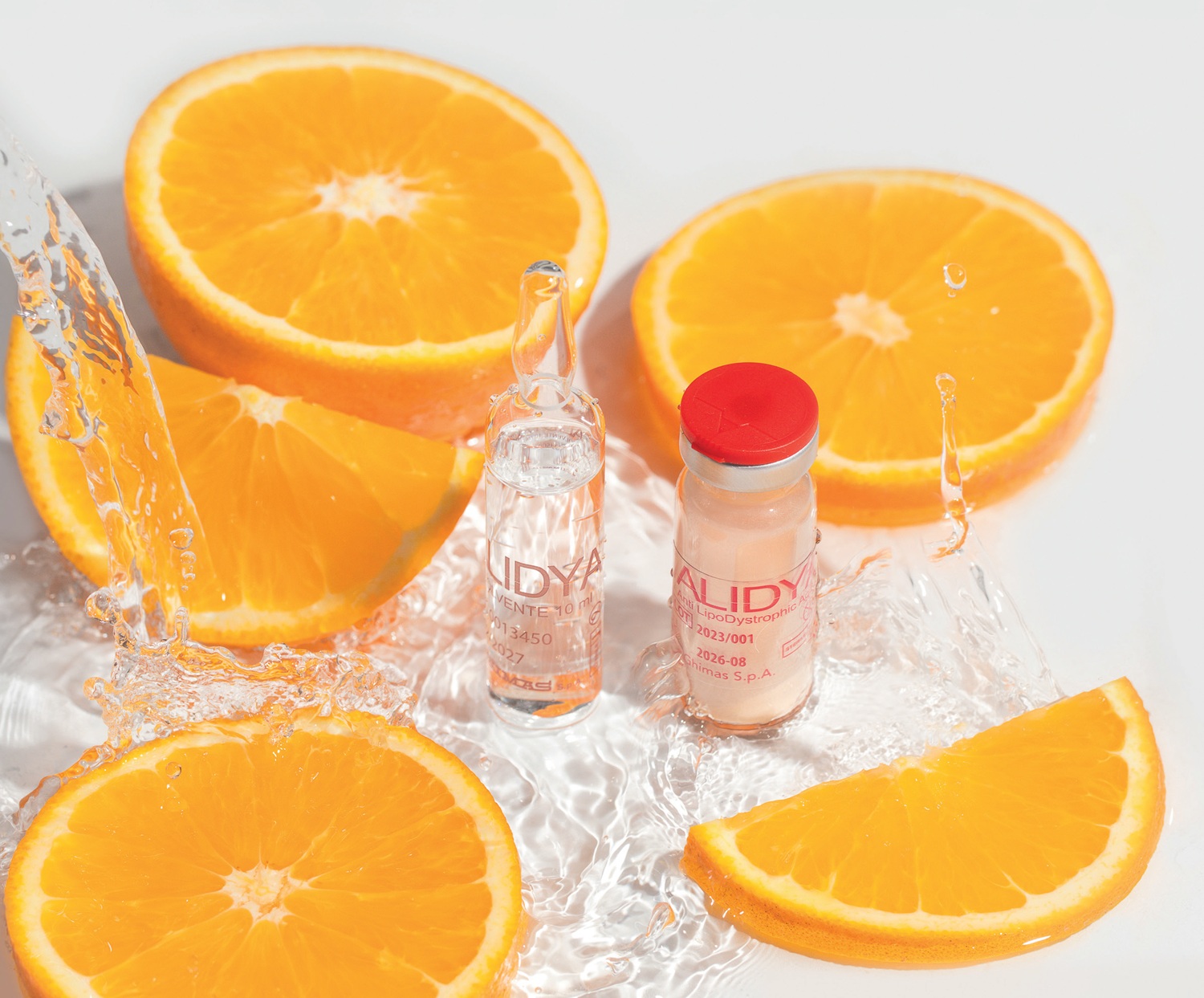
It’s not generally what anyone would first think of when it comes to medical aesthetics but, through discussion with patients, one concern that comes up in clinic again and again is cellulite. Eighty ninety per cent of women of every age, shape and fitness level experience cellulite which can be unsightly, distressing and a destroyer of confidence. It’s so important our patients understand that cellulite has nothing to do with being overweight or unfit, it’s a structural and biochemical issue happening beneath the surface, and no amount of squats or clean eating will fully undo it on its own. What can be done, though, is treat it properly, and that’s where Alidya comes in.
Alidya has been on the market worldwide since 2012, available in over 50 countries. It remains one of the few which is a genuine workhorse for gynoid lipodystrophy, which is the proper clinical name for cellulite. It’s a CE-marked, Class III injectable medical device, made by Marllor Biomedical, and it’s specifically licensed for the prevention and treatment of cellulite rather than being a generic mesotherapy cocktail. Its safety profile has stayed genuinely reassuring, with no significant adverse effects reported.
So what’s actually in the vial?
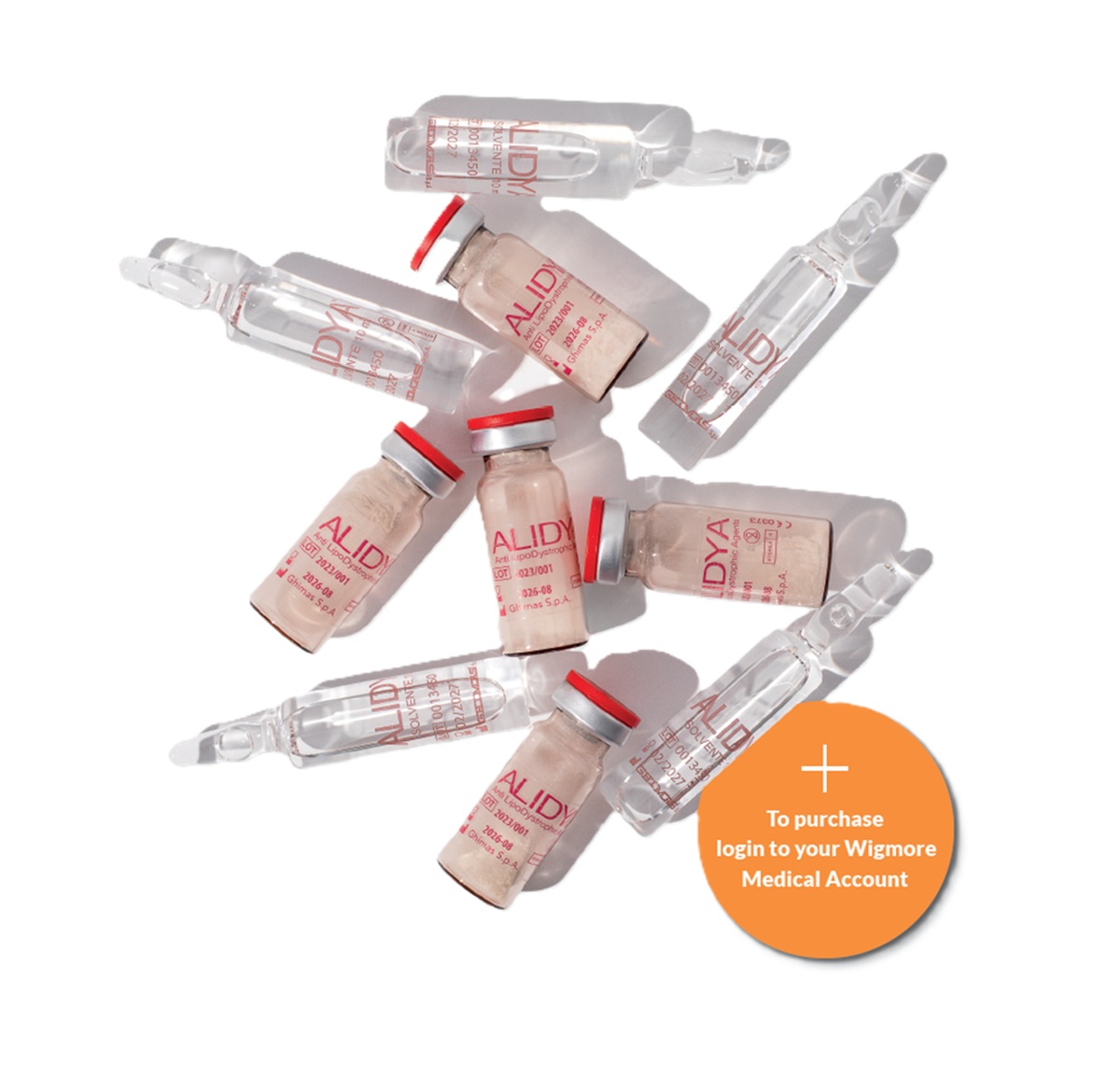
Alidya comes as a lyophilised powder, freeze-dried for stability, which is reconstituted with sterile water immediately before use. Once mixed, there’s a formulation built around a handful of key active ingredients, each doing a specific job. Sodium EDTA acts as a chelating agent, and this is really the clever part of the science. It binds and removes ferrous iron and other metal ions from the tissue, which matters because free iron drives the Fenton reaction, a chemical process that generates oxidative stress in the extracellular matrix. Strip out the iron, and the substrate for that reaction is reduced, which in turn calms the low grade inflammation that’s thought to underpin a lot of cellulite progression, and helps protect cell membranes from lipid peroxidation into the bargain.
Alongside the EDTA, there’s mannitol, included at a dose that isn’t pharmacological in itself but works as both a free radical scavenger and a drainage agent, helping to shift fluid that’s pooled in the interstitial space as a result of poor microcirculation. Then there’s a polyamino acid gel, which supports the extracellular matrix and gives the skin’s own collagen producing machinery something to work with, plus calcium ascorbate and a buffering system to keep everything stable and comfortable once it’s under the skin. It’s a purposeful formulation, addressing oxidative stress, drainage and matrix support all in one treatment,
rather than throwing a single active at a multifactorial problem.
Treatment protocol
" Cellulite isn’t caused by one single mechanism, it’s structural, vascular and inflammatory all at once... "
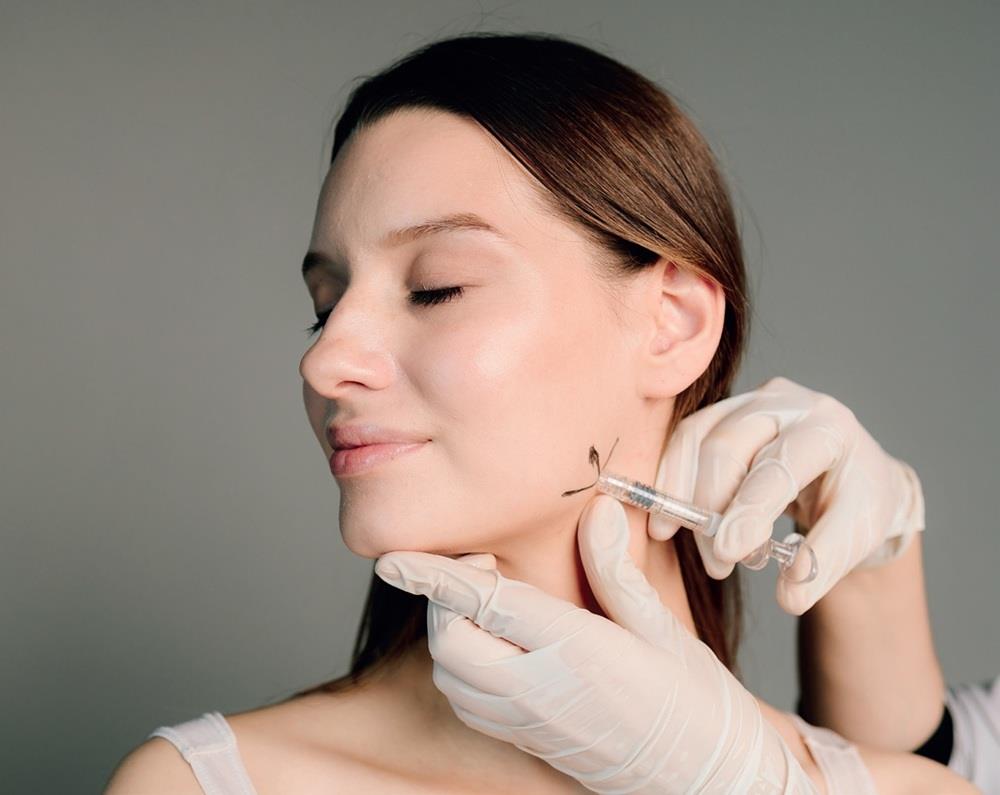
In terms of how it’s actually delivered, the standard course runs to seven weekly sessions, with the powder reconstituted freshly before each appointment and administered as tiny micro-boluses into the hypodermis or via cannula distribution. It’s not a dramatic looking procedure from the practitioner’s side, it’s methodical rather than showy, but that steady, repeated delivery is exactly what allows the active ingredients to build their effect on the tissue over time rather than relying on one big hit. Most patients notice a gradual softening of texture and a reduction in that pitted, dimpled appearance across the course, with the improvement often continuing to settle in the weeks after the final session. For patients with a higher inflammatory load, whether that’s chronic stress, poor sleep or ongoing hormonal influences such as the perimenopause, it is usual to recommend a higher dose and increased frequency of the maintenance protocol once the initial course is complete, simply because the tissue environment needs a bit more ongoing support to hold onto the gains.
Improving results
Alidya can achieve remarkable results on its own, but to optimise the treatment, building a full holistic treatment protocol is where the greatest gains can be seen. Including lifestyle changes (increased movement, optimal sleep, reduced toxic load) and in combination with other modalities such as radiofrequency, and lymphatic massage being particularly effective.
The reasoning is fairly straight forward once you think about what each treatment is actually doing. Cellulite isn’t caused by one single mechanism, it’s structural, vascular and inflammatory all at once, with fibrous septa tethering the dermis, sluggish microcirculation, and oxidative tissue stress all playing a part. Radio frequency works on the thermal and structural side of that equation, heating the dermis and subcutaneous tissue to stimulate collagen remodelling and improve skin laxity, and there’s a reasonable body of evidence now showing it produces measurable improvements in cellulite severity and patient satisfaction, particularly for mild to moderate presentations. Alidya, meanwhile, works at the biochemical level, chelating iron, calming oxidative stress and supporting the matrix from within. Put simply, one treatment is remodelling the architecture while the other is correcting the environment that caused the damage in the first place. It is common to find that, patients who combine a course of Alidya with regular radiofrequency sessions tend to report a more visible and, importantly, more satisfying result than either treatment tends to achieve alone, and this mirrors what the wider literature says about multimodal approaches generally outperforming single interventions for a condition as layered as cellulite.
Potentially alternating the two within the same overall programme rather than stacking them on the same visit, giving the tissue a chance to settle between sessions is a sound approach, and patients generally find this easier to fit around work and family life than trying to cram everything into one longer appointment. It also means that if bruising from the Alidya session is more noticeable than usual, there’s a natural gap before the next radiofrequency
visit, which patients tend to appreciate.
The patients who tend to do best with this combined approach are the ones with a genuine structural and inflammatory picture, so moderate to severe dimpling alongside some skin laxity, rather than very mild, early-stage cellulite where lifestyle measures and a course of Alidya alone may well be sufficient. Taking a full and complete medical and lifestyle history is essential before recommending anything, because factors like chronic stress, poor sleep, smoking and hormonal changes all feed into how much inflammatory support the tissue needs, and that shapes both the initial protocol and the maintenance plan that follows.
So, what is the patient experience like?
Pain wise, most patients describe the sensation as mild to moderate. It’s either a series of small injections delivered fairly quickly across the treatment area or via cannula distribution, so there’s a degree of discomfort, but it’s rarely anything patients describe as severe, and most say it’s very manageable, particularly once they know what to expect from session two onwards. Setting expectations beforehand is essential, a little forewarning goes a
long way to keeping anxiety, and therefore perceived pain, right down.
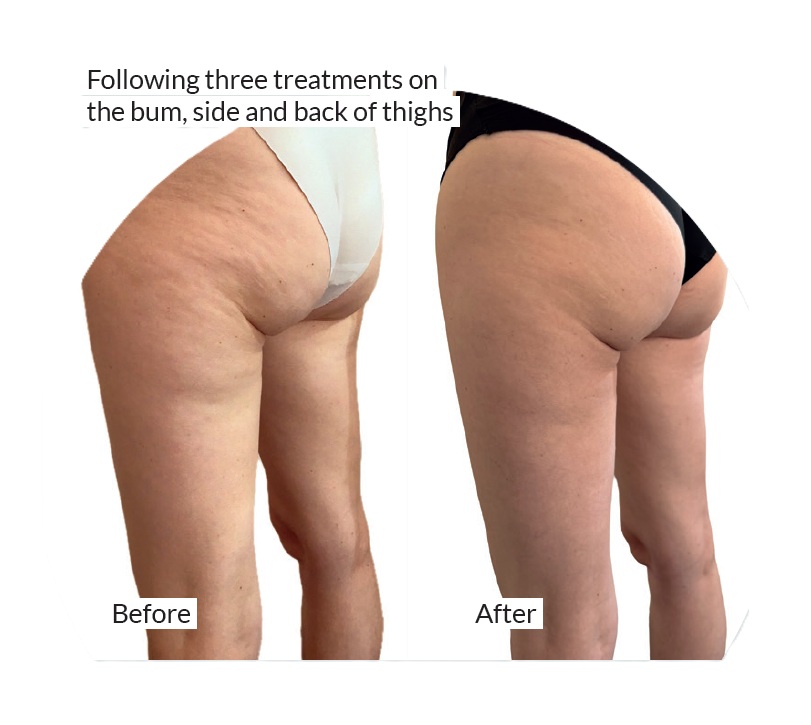
Bruising is one to be very clear about, because it can genuinely be considerable. Multiple micro-injections are being delivered into an area with a fine network of superficial vessels, so some bruising is to be expected, and occasionally it can look more dramatic than patients anticipate, especially after the first session. Equally cannula distribution, deliberately disrupting septae and working in areas where there can be substantial superficial vascularity is a significant bruising risk. Setting this expectation clearly at consultation, showing before and after photos of typical bruising, and reassuring patients that it settles within a week to ten days in most cases is all part of both initial and subsequent consultations. Patients who prepared for this tend to take it in their stride far better than those who are caught off guard by it." Downtime is generally minimal, and this is often the deciding factor for patients...to go ahead "
Downtime is generally minimal, and this is often the deciding factor for patients weighing up whether to go ahead. There’s no need to take time off work, no dressings, no restriction on daily activity beyond avoiding vigorous exercise or excessive heat to the area for a day or two. Most patients are back to their normal routine that same day, bruising aside, which makes it a genuinely accessible treatment for busy women who simply can’t build in a recovery period around their working week. That said, wearing a dress or very loose trousers are far preferable to the patient wearing tight leggings or jeans immediately post treatment, both from a prevention of infection perspective and overall patient comfort.
For anyone considering Alidya, whether a practitioner weighing it up for their clinic or a patient wondering if it’s right for them, is that it rewards a proper course of treatment and realistic expectations. This isn’t a quick fix delivered in a single session, and it isn’t a fat reduction treatment either, it’s a targeted, evidence informed approach to the structural and inflammatory drivers of cellulite, and when it’s paired thoughtfully with something like
radiofrequency, the results tend to speak for themselves. As ever, the best outcomes come from good assessment, honest conversations about what to expect, and a treatment plan built around the individual rather than a one size fits all protocol.
References: 1. Arora G, Patil A, Hooshanginezhad Z, et al. Cellulite: Presentation and management. J Cosmet Dermatol. 2022; 21: 1393–1401. doi:10.1111/jocd.14815 2. Bass, L.S. and Kaminer, M.S.(2020) ‘Insights into the pathophysiology of cellulite: a review’, Dermatologic Surgery, 46(S1), pp. S77–S85. doi: 10.1097/DSS.0000000000002388. Allen Gabriel, Vivian Chan, Marissa Caldarella, Tanya Wayne, Erin O’Rorke, Cellulite: Current Understanding and Treatment, Aesthetic Surgery Journal Open Forum, Volume 5, 2023, ojad050, https://3. doi.org/10.1093/asjof/ojad050. 4. Marllor Biomedical (2024) Alidya: effective non-invasive cellulite treatment. Available at: https://www.marllor.com/alidya (Accessed: 30 July 2026). 5. Motolese, P. (2011) ‘Extracellular iron toxicity as a determinant physiopathological model for so-called “cellulite”’, European Journal of Aesthetic Medicine and Dermatology, 1(1), pp. 17–21. 6. Sadick, N. (2019) ‘Treatment for cellulite’, International Journal of Women’s Dermatology, 5(1), pp. 68–72. doi: 10.1016/j.ijwd.2018.09.002. 7. Wanitphakdeedecha, R., Sathaworawong, A., Manuskiatti, W., & Sadick, N. S. (2017). Efficacy of multipolar radiofrequency with pulsed magnetic field therapy for the treatment of abdominal cellulite. Journal of Cosmetic and Laser Therapy, 19(4), 205–209. https://doi.org/10.1080/14764172.2017.1279332