 Added to basket

 Unapplied Changes











 Kendall Jenner recently hit the news for stating she hadn’t had any ‘work’ done on her nose; in fact, she believes her skin medication Accutane may be responsible for ‘shrinking’ her nose instead. This is a claim that experts have shared mixed opinions on—on the one hand, says Dr. Anil Joshi, Consultant Facial Plastic Surgeon, Accutane “does not change the bone or cartilage of the nose, therefore, it cannot truly make the nose structurally smaller in the way surgery can.”
On the other, he notes, “the nose contains a high number of oil glands, and Accutane reduces oil production and can thin out very oily or thick skin.” For this reason, “in people with thick nasal skin or a slightly rounded tip caused partly by skin fullness, this may make the nose look a little more refined.”
Accutane is a strong, medical prescriptive treatment for acne, and therefore should not be used for cosmetic reasons such as making the nose appear smaller. It’s also, as mentioned, not exactly the most effective or reliable method for shaping the nose.
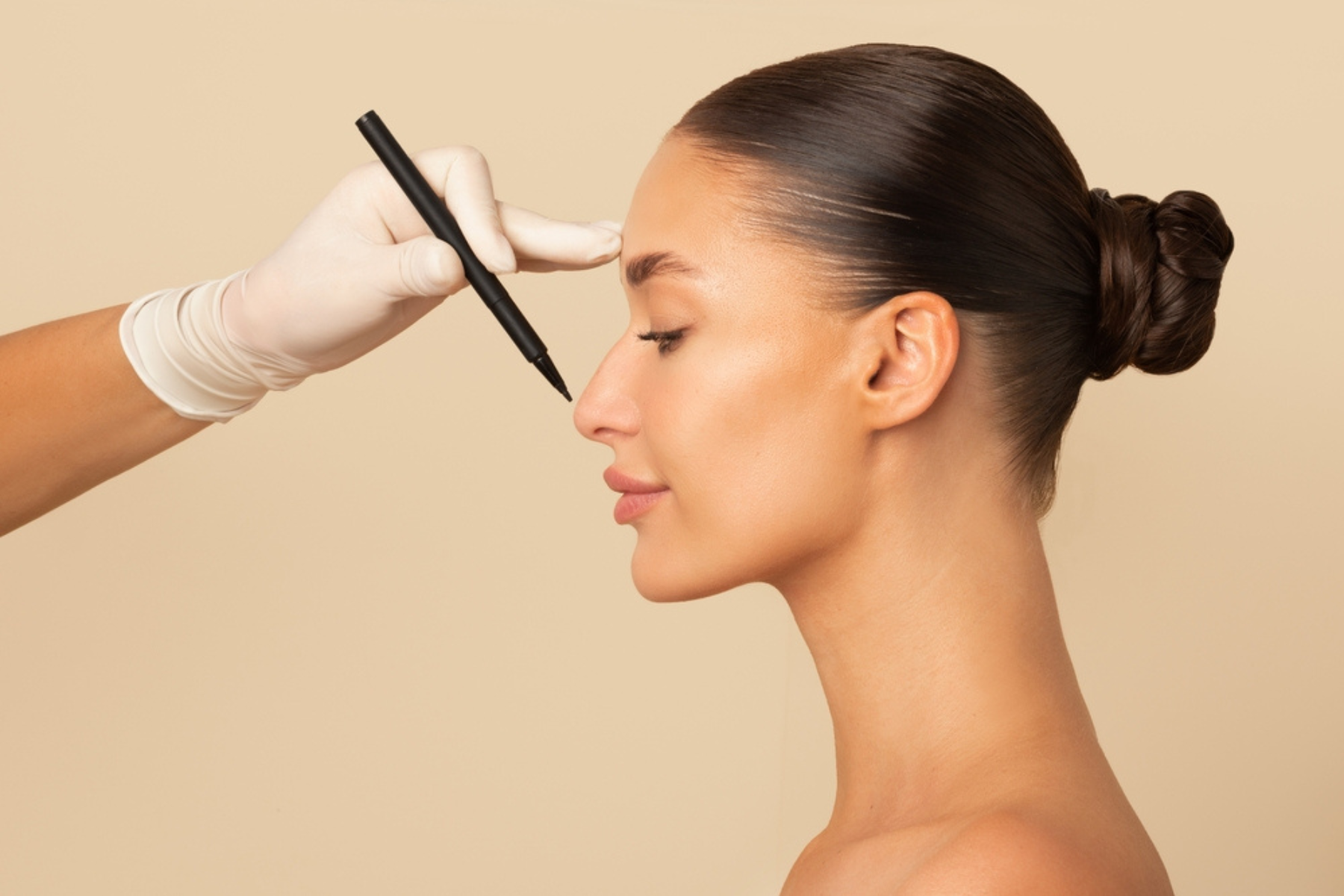
For those considering aesthetic ‘tweakments’ or more invasive nasal surgeries for cosmetic purposes, there are different avenues you can take that are largely dependable and impactful. From injectables to rhinoplasty, the following are the most effective and common approaches.
Non-surgical rhinoplasty
One of the most common aesthetic approaches for noses is the non-surgical rhinoplasty, which uses hyaluronic acid dermal filler. “Small volumes are injected strategically to smooth a dorsal hump, straighten a mildly crooked nose, lift a drooping tip, or improve symmetry,” explains Cosmetic Doctor Dr Emmaline Ashley.Injectables of this nature, however, can only add volume rather than make a nose smaller—it’s more about improving shape or proportion. For this reason, good candidates include people with small irregularities or minor asymmetry, anyone with a low bridge that needs subtle definition or those with small contour issues, including selected post-surgery refinements, according to Dr Joshi.
It’s important to consider the finer details of a non-surgical rhinoplasty: for one, results are temporary, tending to last around 9-18 months. This is considerably longer than filler in other areas like the lips, mostly due to the lack of movement in the nose. Nose filler is usually a little uncomfortable but not painful, and side effects include bruising and swelling.
A rare but very serious side effect of having filler here is vascular occlusion if filler blocks a blood vessel, which is why working with a trusted medical professional is essential.
Botulinum toxin (muscle-relaxing injections)
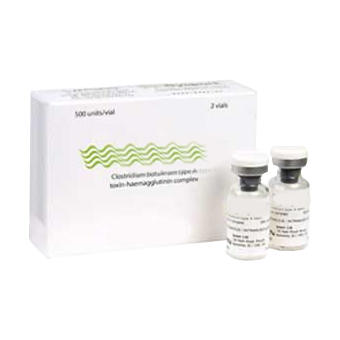
Another temporary route to take would be botulinum toxin injections (often known as Botox). These muscle relaxing injections can be used for a number of concerns around the nose. Firstly, they can treat ‘bunny lines’ on the bridge of the nose, and also reduce nostril flaring. “In selected cases,” adds Dr Joshi, “small doses can relax the muscle that pulls the nasal tip downward when smiling, which can allow the tip to sit slightly higher.”Notably, this approach is not designed to change the shape of the bridge or nose width, but more specific concerns. The effects also only tend to last for around three to four months, and are very subtle in nature. For this reason, seeking the expertise of a medical professional is essential to achieve the best results.
PDO threads
Another, slightly lesser-known option is PDO Threads: these are medical-grade sutures that are dissolvable and used for lifting and creating structure. They’re often used in areas like the cheeks and necks, but can also be administered on the nose. Dr Ashley says these “offer a middle ground, providing immediate structural lift and stimulating collagen production.” They can contour or straighten a nose, offer a lifting effect and help to create a more defined appearance generally.Because they stimulate collagen production, the results of PDO Threads can actually last between 12 and 24 months, making them a good investment—as aesthetic procedures go. That said, “they are popular in Asia but less widely adopted in the UK, and evidence for long-term outcomes remains relatively limited,” notes Dr Ashley, so consider this option carefully with a medical professional, and understand that it’s not yet common here.
Surgical rhinoplasty
Before injectables and other aesthetic ‘tweakments’ became commonly adopted, the ‘nose job’ was largely considered one of the only ways to change the shape and size of a nose. To this day, they still tend to offer the most effective long-term results.“Non-surgical treatments offer flexibility and minimal downtime for subtle refinements, but for significant permanent changes, surgery remains the only reliable route,” says Ashley. It’s important to consider, however, that surgical procedures are a sizeable investment, both financially and in terms of time, energy, and downtime. That said, they’ve come a long way.
Full rhinoplasty, says Dr Ashley, “remains the gold standard for comprehensive nasal reshaping.” It is performed under general anesthetic, and “involves restructuring bone and cartilage to alter the nose's size, shape, and proportion.” It is, she adds, “the only option that can reliably make a nose smaller.” Rhinoplasty can address a number of concerns, from “a large hump on the bridge or a wide or boxy tip,” says Dr Joshi, to “a drooping tip, crookedness or asymmetry.”
There are further specific nose surgeries within the rhinoplasty family that can target different things. “Septorhinoplasty combines cosmetic reshaping with correction of a deviated septum, making it ideal for patients with both aesthetic and functional concerns,” says Dr Ashley, while “tip plasty is a more targeted procedure focusing exclusively on reshaping the nasal tip without altering the bridge or bones, offering a quicker recovery for patients who only want changes in that specific area.”
Need to know
Whichever surgical procedure is right for the patient, Ashley says it’s crucial to consider that recovery involves two to three weeks of bruising and swelling, with residual tip swelling taking up to a year to fully resolve. Joshi adds that as with any surgery there are risks such as bleeding, infection, asymmetry, or the need for revision surgery; he advises choosing an experienced, fully qualified board-certified surgeon, and recommends that, “all their previous works should be considered thoroughly before making an informed decision.”Deciding on the right route for any cosmetic nose procedure—whether surgical or not—depends on individual concerns, budget and level of investment (time and emotionally).
“The most important factor in either case is choosing a qualified, experienced practitioner who understands nasal anatomy and can set realistic expectations,” concludes Ashley.
